





Installing a metal exterior door is one of the most significant home improvements you can make. It's not just about changing a structural element; it's about enhancing security and improving the overall appearance of the main entrance.
After working with metal doors, I understood that their true value lies in the fact that, thanks to their robust and customizable design, they provide effective reinforcement against unauthorized access, something that no conventional wooden door can match with the same strength.
But for them to perform their function correctly, the installation must be done precisely.
Tools needed to install an exterior metal door
Before you begin, make sure you have:
- Hammer drill
- Bubble or laser level
- Wooden wedges
- Polyurethane foam
- Anchor screws
- Measuring tape
- Hammer
- Screwdriver
- Exterior sealant
An accurate installation begins with correct measurement.
Step 1: Remove the old door
- Remove the door leaf.
- Remove hinges and screws.
- Carefully remove the frame.
- Carefully remove the frame.
This step is essential to ensure that the new exterior metal door is perfectly aligned.
Step 2: Check the installation hole
Measures:
- High
- Broad
- Depth
A small tolerance should be allowed for shim adjustments. If the hole is uneven, correct it before installation.
This is where many installations fail: not checking squareness or leveling.

Step 3: Install the metal door frame
Insert the frame into the opening.
Use wedges for:
- Ensure vertical alignment
- Ensure level horizontal
- Maintain perfect square
Check several times with a level. A metal door that isn't level won't close properly.

Step 4: Secure the frame with anchors
Drill through the frame into the wall.
Install expansion bolts or sturdy metal anchors.
Tighten gradually while checking that the frame does not lose alignment.
A properly secured metal exterior door becomes a real security barrier, as its robust and customizable design provides effective reinforcement against unauthorized access.
Step 5: Place the door leaf
Install the leaf on the hinges.
Check:
- Smooth opening
- Frictionless closure
- Lock alignment
Adjust hinges if necessary.
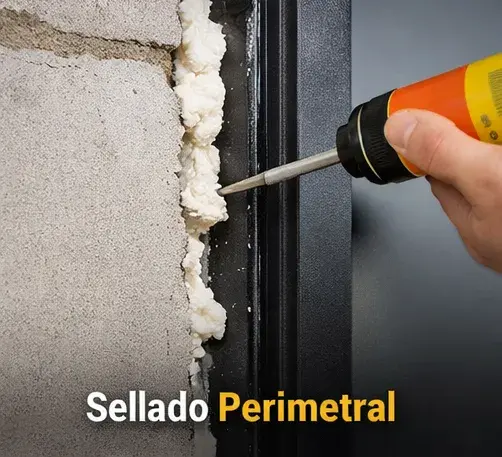
Step 6: Sealing and insulation
Fill the spaces between the frame and the wall with polyurethane foam.
Once dry:
- Cut excess
- Apply exterior sealant
- Install flashing if necessary
This prevents water leaks and improves thermal insulation.
Safety and aesthetics: the ideal balance
One of the main reasons for choosing this type of door is that, in addition to offering structural protection, its finishing options allow it to be aesthetically integrated into any environment.
Today there are finishes:
- Wood imitation
- Texturizados modernos
- Custom colors
- Matte or satin finishes
That means you're not only reinforcing security, but also improving the facade.

Common mistakes when installing a metal exterior door
❌ Do not check leveling
❌ Using unsuitable anchors
❌ Not sealing properly
❌ Do not check lock alignment
❌ Measuring the hole incorrectly
Each error can affect both security and functionality.
Real advantages of an exterior metal door
When properly installed, a metal door:
- Increased security
- Improves insulation
- Reduced maintenance
- Increases the property value
And most importantly, thanks to their robust and customizable design, they provide effective reinforcement against unauthorized access, something essential in today's homes.
Furthermore, their finishing options allow them to be aesthetically integrated into any environment, whether it is a modern, classic or industrial house.

How long does it take to install a metal door?
If the hole is already prepared:
- Professional installer: 3 to 4 hours
- DIY with experience: 5 to 7 hours
If structural adjustment is required, it can be extended.
Conclusion
Installing an exterior metal door isn't just a home improvement project. It's a direct investment in security, durability, and aesthetics.
When you choose correctly and perform a precise installation, you obtain a structure that, thanks to its robust and customizable design, provides effective reinforcement against unauthorized access.
And at the same time, their finishing options allow them to be aesthetically integrated into any environment, achieving a balance between protection and design.
If done properly, you're not just changing a door. You're strengthening your home.